
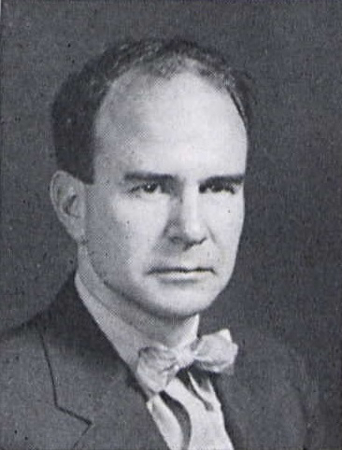
George C. Homans
American sociologist who founded social exchange theory.

War Department. The Adjutant General's Office. 3/4/1907-9/18/1947 · Public domain
George C. Homans (1910–1989) was an American sociologist who founded the social exchange theory in 1958 with his work "Social Behavior as Exchange." He applied principles of behavior psychology and sociology to social interactions, emphasizing individual behavior in dyadic exchanges. Homans defined social exchange as the exchange of activity, tangible or intangible, and more or less rewarding or costing between at least two persons. His work centered on concepts including equilibration, expectancy, and distributive justice in dyadic exchanges, explaining how people interact in small groups and showing that rewards are usually based on how much effort and resources individuals contribute.
- born
- 1910
- died
- 1989
- field
- Sociology
- nationality
- American
- known_for
- Founder of social exchange theory
Verified Timeline
Lore & Background
George C. Homans (1910–1989) was an American sociologist. The foundation of the social exchange theory was first introduced by Homans in 1958 based on his work "Social Behavior as Exchange," where he applied principles of behavior psychology and sociology to social interactions. Homans expanded his research in 1961 through "elementary forms of social behavior." Homans based his theory on concepts that include equilibration, expectancy, and a distributive justice in dyadic exchanges. Using this framework, he explained how people interact in small groups, showing that the rewards that they get are usually based on how much effort and resources that they contribute. Homans summarized his system with three main propositions: success, stimulus and deprivation-satiation propositions. The success proposition states: when one finds they are rewarded for their actions, they tend to repeat the action. The stimulus proposition states: the more often a particular stimulus has resulted in a reward in the past, the more likely it is that a person will respond to it. The deprivation–satiation proposition states: the more often in the recent past a person has received a particular reward, the less valuable any further unit of that reward becomes. Homans defined social exchange as the exchange of activity, tangible or intangible, and more or less rewarding or costing between at least two persons. After Homans founded the theory, other theorists continued to write about it, particularly Peter M. Blau and Richard M. Emerson, who in addition to Homans are generally thought of as the major developers of the exchange perspective within sociology. Homans' work emphasized the individual behavior of actors in interaction with one another. Although there are various modes of exchange, Homans centered his studies on dyadic exchange.
Reader's Guide
Homans's significance lies in his foundational contributions to social exchange theory. He introduced the theory in 1958 with "Social Behavior as Exchange" and expanded it in 1961 through "elementary forms of social behavior." His framework uses three propositions: success (rewarded actions are repeated), stimulus (past rewarded stimuli prompt response), and deprivation-satiation (recent rewards become less valuable). Homans defined social exchange as the exchange of activity, tangible or intangible, and more or less rewarding or costing between at least two persons. He centered his studies on dyadic exchange and emphasized individual behavior of actors in interaction. Homans used the concepts of individualism to explain exchange processes; to him, the meaning of individual self-interest is a combination of economic and psychological needs. He is one of the major developers of the exchange perspective within sociology, alongside Peter M. Blau and Richard M. Emerson.
Did You Know?
- Homans first introduced social exchange theory in 1958 with his work 'Social Behavior as Exchange.'
- He defined social exchange as the exchange of activity, tangible or intangible, and more or less rewarding or costing between at least two persons.
- Homans summarized his system with three main propositions: success, stimulus, and deprivation-satiation.
- He centered his studies on dyadic exchange, emphasizing individual behavior of actors in interaction.
- Homans is considered one of the major developers of the exchange perspective within sociology, along with Peter M. Blau and Richard M. Emerson.
Founding the Exchange Perspective
George C. Homans (1910–1989) laid the groundwork for social exchange theory in 1958 with his work "Social Behavior as Exchange," in which he brought together principles from behavioral psychology and sociology to explain how people navigate their interactions with one another. He expanded this framework in 1961 with "Elementary Forms of Social Behavior," deepening his analysis of how individuals operate within small groups. At the heart of his approach was a specific definition: social exchange is the transfer of activity—whether tangible or intangible, rewarding or costly—between at least two persons. Homans grounded his model in concepts of equilibration, expectancy, and distributive justice, arguing that the rewards a person receives in a relationship are typically proportional to the effort and resources they invest. By treating interpersonal relationships through the lens of cost-benefit evaluation, he gave sociologists a structured way to understand why people maintain, deepen, or ultimately sever their connections with others.
Three Propositions of Human Interaction
Homans distilled his theoretical system into three core propositions that together explain how individuals learn, adapt, and eventually tire within any ongoing relationship. The success proposition holds that when a person discovers their behavior has been rewarded, they are inclined to repeat that behavior in the future. The stimulus proposition adds a layer of conditioning: the more frequently a particular stimulus has historically produced a reward, the stronger the person's tendency to respond to it becomes. The deprivation-satiation proposition introduces a crucial limit—when a specific reward has been received repeatedly in the recent past, each additional unit of that reward loses some of its perceived value. Together, these three principles paint a picture of social life as a continuous process of learning and diminishing returns. They explain not only why people invest in relationships where their contributions are reciprocated but also why they withdraw when the costs begin to outpace the benefits, particularly when their efforts go unreturned.
Dyadic Focus and the Psychology of Exchange
Where some later theorists broadened the scope of exchange analysis, Homans deliberately concentrated his lens on the dyad—the most fundamental unit of social interaction between two individuals. His work emphasized the behavior of individual actors as they engage with one another, grounding his explanations in the psychology of instrumental behavior rather than in purely economic or structural terms. This psychological orientation set his contributions apart from those of contemporaries like Peter M. Blau, who leaned toward technical economic analysis and emergent social structure. Homans believed that understanding how a single person evaluates rewards, costs, and fairness in a face-to-face exchange was the essential building block for understanding larger social patterns. His framework applied across a wide spectrum of relationships—romantic partnerships, friendships, family ties, professional dealings, and even the brief word exchange with a customer at a cash register—treating each as a context in which an individual weighs what they give against what they receive and decides whether the interaction is worth continuing.
Seeding a Broader Theoretical Tradition
Homans' 1958 and 1961 works did not merely introduce a single model; they ignited a sustained line of inquiry that shaped sociology for decades. Peter M. Blau and Richard M. Emerson, both building directly on Homans' foundations, are generally regarded alongside him as the principal architects of the exchange perspective within the discipline. Blau extended the framework by distinguishing social from economic exchange and by exploring how power emerges within exchange patterns, while Emerson drew inspiration from both Homans and Blau to foreground resource availability, power, and dependence as the defining dynamics of any relationship. Emerson even argued that exchange theory functions less as a standalone theory than as a framework within which other theories can converge and be compared to structural functionalism. Though each successor shifted emphasis—Blau toward emergent structure, Emerson toward power dynamics—the psychological, dyadic core that Homans established remained the reference point against which their contributions were measured and refined.
Gallery



Frequently Asked Questions
Who is George C. Homans?
George Caspar Homans (1910–1989) was an American sociologist born in Boston who is widely credited with founding behavioral sociology and helping to shape social exchange theory. He spent much of his career in Cambridge, Massachusetts, where he also died in 1989.
What is George C. Homans best known for?
He is most recognized as the founder of behavioral sociology and as one of the principal architects of social exchange theory. His central project was to explain the elementary forms of social behavior through observable actions, rewards, and costs rather than through purely abstract constructs.
What are George C. Homans's major published works?
His two most cited books are The Human Group and Social Behavior: Its Elementary Forms. Together they set out the propositions he developed to account for how individuals interact and form social bonds.
How did George C. Homans shape social exchange theory?
Homans grounded social exchange theory in concrete, observable behavior, arguing that people's interactions can be understood through patterns of rewards, costs, and expectations. This behavioral framing distinguished his contribution from more purely structural or symbolic approaches to exchange.
What leadership role did George C. Homans hold in the sociology profession?
He served as the 54th president of the American Sociological Association, a position that reflected his standing as a leading figure in mid-twentieth-century American sociology.
More in Political And Social Theorists 1-24
Elsewhere in the Political And Social Theorists universe
Spotted an error? Know more?
This is a living reference — every entry is fact-audited, and reader corrections feed straight into our audit queue. Suggest an edit · See this site's audit record