
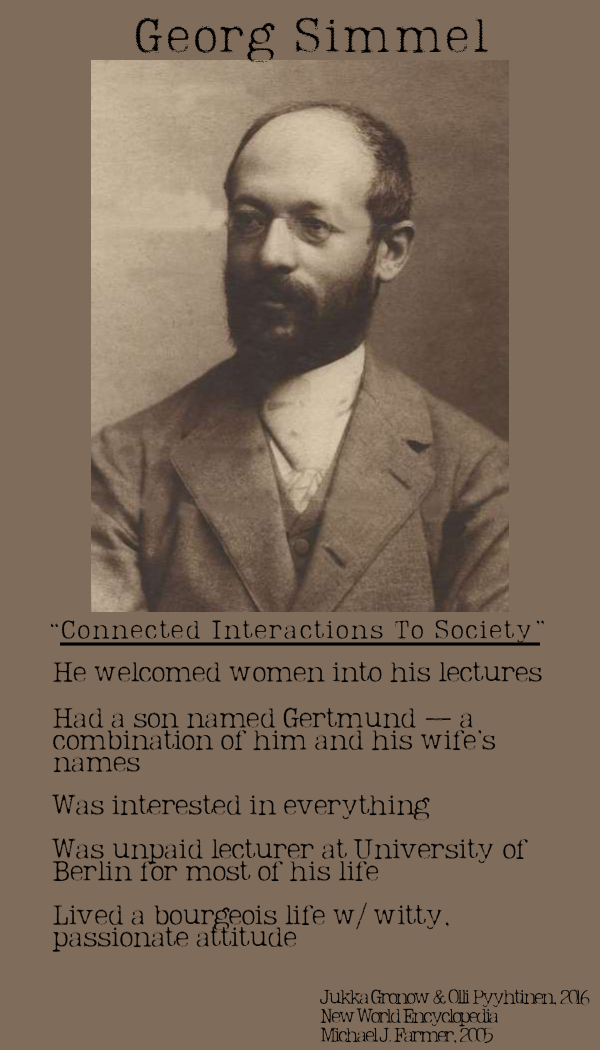
Georg Simmel
German sociologist who asked 'What is society?'

OTFW , Berlin · CC BY-SA 3.0
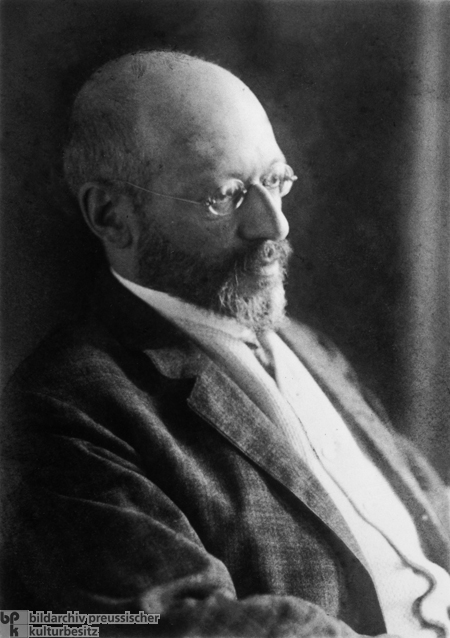
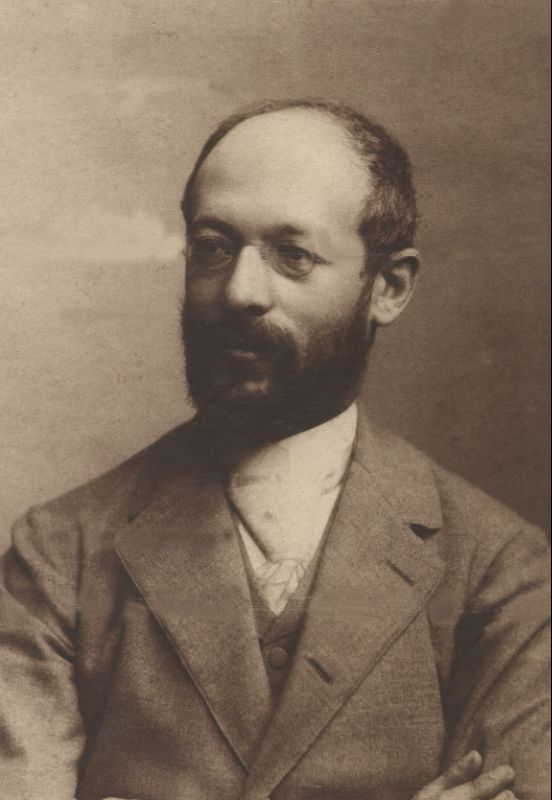
Georg Simmel was a German sociologist, philosopher, and critic. A founding figure of sociology, his neo-Kantian approach helped establish sociological antipositivism, asking 'What is society?' in analogy to Kant's 'What is nature?'. He pioneered analyses of individuality and social fragmentation, and his work anticipated urban sociology, symbolic interactionism, and social network analysis.
- born
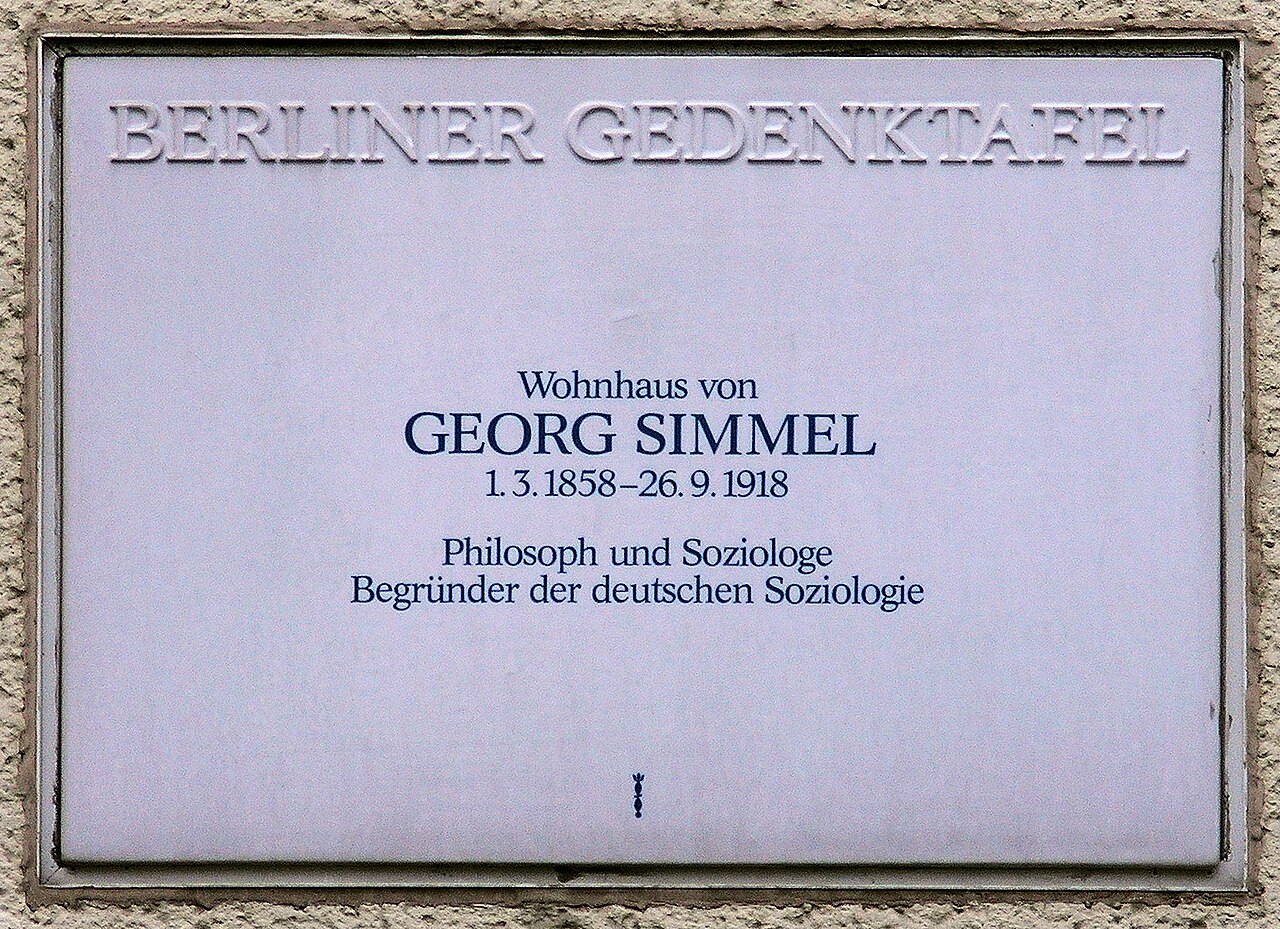
- 1 March 1858
- died
- 26 September 1918
- field
- Sociology, philosophy, criticism
- nationality
- German
- known_for
- Sociological antipositivism, forms and contents, relational sociology, 'The Metr
Verified Timeline
Lore & Background
Georg Simmel was born in Berlin, Germany, the youngest of seven children to an assimilated Jewish family. His father, Eduard Simmel (1810–1874), a prosperous businessman and convert to Roman Catholicism, had founded a confectionery store called 'Felix & Sarotti' that would later be taken over by a chocolate manufacturer. His mother Flora Bodstein (1818–1897) came from a Jewish family who had converted to Lutheranism. Simmel was baptized as a Protestant when he was a child. After his father died in 1874, when Georg was 16, he was adopted by Julius Friedländer, the founder of an international music publishing house known as Peters Verlag, who endowed him with the large fortune that enabled him to become a scholar. Beginning in 1876, Simmel studied philosophy and history at the Humboldt University of Berlin, going on to receive his doctorate in 1881 for his thesis on Kantian philosophy of matter, titled 'Das Wesen der Materie nach Kants Physischer Monadologie' ('The Nature of Matter According to Kant's Physical Monadology'). In 1885, Simmel became a privatdozent at the University of Berlin, officially lecturing in philosophy but also in ethics, logic, pessimism, art, psychology and sociology. His lectures were not only popular inside the university, but attracted the intellectual elite of Berlin as well. Although his applications for vacant chairs at German universities were supported by Max Weber, Simmel remained an academic outsider. This was partly because he was seen as a Jew during an era of anti-Semitism, but also simply because his articles were written for a general audience rather than academic sociologists.
Reader's Guide
Simmel's significance lies in his foundational role in sociology and his neo-Kantian approach that established sociological antipositivism. He discussed social and cultural phenomena in terms of 'forms' and 'contents' with a transient relationship, wherein form becomes content, and vice versa dependent on context, forerunning structuralist styles of reasoning in the social sciences and heralding relational sociology. His work 'The Metropolis and Mental Life' anticipated urban sociology, symbolic interactionism, and social network analysis. Simmel's dialectical method focused on social relations, conflicts, and contradictions, and he was known as a methodological relationalist. In 1909, Simmel, Ferdinand Tönnies, Max Weber, and others co-founded the German Society for Sociology, and he served as a member of its first executive body. His nonpositivist theory, along with Weber's, informed the eclectic critical theory of the Frankfurt School. Simmel's legacy includes his analyses of sociability—which he defined as 'the play-form of association'—and his social geometry of dyads and triads, where a dyad allows a person to retain individuality while a triad risks subordination. He also explored the tension between individual creativity and social structures, believing that social and cultural structures come to have a life of their own. Simmel remained an academic outsider for much of his career, receiving an ordinary professorship with chair only in 1914 at the then German University of Strassburg, where he died from liver cancer in 1918.
Did You Know?
- Simmel's father founded a confectionery store called 'Felix & Sarotti' that was later taken over by a chocolate manufacturer.
- Simmel was adopted by Julius Friedländer, founder of the international music publishing house Peters Verlag, whose fortune enabled Simmel to become a scholar.
- Simmel had a secret affair with his assistant Gertrud Kantorowicz, who bore him a daughter in 1907, a fact hidden until after his death.
- In 1917, Simmel stopped reading newspapers and withdrew to the Black Forest to finish his book 'The View of Life' (Lebensanschauung).
- Simmel co-founded the German Society for Sociology in 1909 with Ferdinand Tönnies and Max Weber.
The Perpetual Academic Outsider
Georg Simmel occupied a peculiar position in German academia. Though he earned his doctorate at Humboldt University in 1881 with a thesis on Kant's philosophy of matter, and began lecturing as a privatdozent in 1885, he never secured a permanent chair at a German university. His applications were backed by Max Weber, yet they repeatedly failed. Part of the resistance stemmed from the anti-Semitic climate of the era, but Simmel's own choices compounded the problem: he wrote for a broad, curious public rather than for the narrow community of academic sociologists, earning dismissive judgments from his peers. His lectures nonetheless drew Berlin's intellectual elite. What ultimately sustained him was not a salary but a fortune left by his guardian, Julius Friedländer, the founder of the international music publisher Peters Verlag. Simmel could afford to think freely, to move between philosophy, art criticism, psychology, and sociology, without the institutional pressures that shaped his colleagues.
Dialectical Thought and the Architecture of Society
Simmel's theoretical project was built on a dialectical method that refused to draw hard lines between social phenomena. Rather than treating society as a collection of fixed entities, he examined the dynamic interplay of forms and contents, arguing that each could transform into the other depending on context. This relational stance made him a forerunner of structuralist reasoning in the social sciences and a herald of what would later be called relational sociology. His dialectical approach was multicausal and multidirectional, integrating facts with values, attending to past and future alongside the present, and dwelling on conflicts and contradictions as generative forces. At the micro level, he catalogued forms of association—subordination, exchange, conflict, sociability—while emphasizing the creative consciousness embedded in diverse interactions. His neo-Kantian framing, which posed the question of what society is in parallel to Kant's question about nature, helped establish sociological antipositivism. Both Simmel and Weber's nonpositivist theories would later inform the eclectic critical theory of the Frankfurt School.
A Life Between Salons and Shadows
Born in Berlin in 1858 as the youngest of seven children in an assimilated Jewish family, Simmel grew up in the shadow of his father's confectionery business, Felix & Sarotti. After his father's death in 1874, the young Georg was taken in by Julius Friedländer, whose music-publishing empire would later fund his scholarly independence. In 1890 he married Gertrud Kinel, a philosopher who published under the name Marie-Luise Enckendorf, and together they hosted cultivated gatherings in the old salon tradition. Their son Hans Eugen became a physician, and their granddaughter would go on to work as a psychologist. Yet beneath this respectable surface lay a secret: Simmel carried on a long affair with his assistant Gertrud Kantorowicz, who bore him a daughter in 1907—a fact concealed until after his death. His circle of friends included Max Weber, Rainer Maria Rilke, Stefan George, and Edmund Husserl, and he moved fluidly between philosophical discourse and artistic life.
The Final Years and a War-Interrupted Career
In 1909, Simmel joined Ferdinand Tönnies, Max Weber, and others in co-founding the German Society for Sociology, serving on its first executive body. Yet his long-awaited professorship came only in 1914, when he was appointed to an ordinary chair at the University of Strassburg—a position that never felt like home. The outbreak of World War I shattered academic life; lecture halls were converted into military hospitals and all teaching ceased. In 1915 he applied for a chair at Heidelberg but was turned down. By 1917, exhausted by the war's toll, Simmel stopped reading newspapers entirely and retreated to the Black Forest to complete his final book, The View of Life. He died in Strasbourg in September 1918, just before the war's end, from liver cancer. His last years thus combined the quiet of a forest retreat with the violence of a continent at war, and his final work emerged from that tension.
Gallery
Frequently Asked Questions
Who is Georg Simmel?
Georg Simmel was a German sociologist, philosopher, and cultural critic born in 1858 who is widely regarded as one of the founding figures of modern sociology. He approached social life through a neo-Kantian lens, treating the question of what society is as the sociological counterpart to Kant's question about nature.
What is Georg Simmel's most famous concept?
His idea of 'forms and contents' in social life stands out, where he argued that social forms such as exchange, conflict, and association are distinct from the individual contents they organize. This relational thinking anticipated later developments in social network analysis and symbolic interactionism.
What is 'The Metropolis and Mental Life' about?
It is Simmel's short essay examining how the pace, anonymity, and sensory overload of big-city living reshape a person's inner life and social interactions. The piece is often cited as an early foundational text of urban sociology.
What does 'sociological antipositivism' mean in Simmel's work?
Simmel rejected the idea that society could be studied purely through measurable, law-like generalizations the way natural sciences study matter. Instead, he emphasized the unique, qualitative character of social forms and the irreducible complexity of individual experience within them.
When did Georg Simmel live and what was his nationality?
He was born on 1 March 1858 in Berlin and died on 26 September 1918, spending his entire life in Germany. His work across sociology, philosophy, and criticism made him a central German intellectual of the early twentieth century.
More in Political And Social Theorists 1-24
Elsewhere in the Political And Social Theorists universe
Spotted an error? Know more?
This is a living reference — every entry is fact-audited, and reader corrections feed straight into our audit queue. Suggest an edit · See this site's audit record