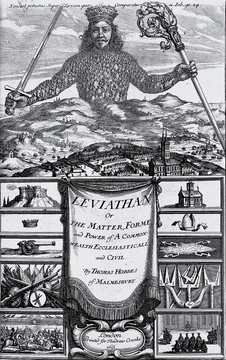
Samuel P. Huntington
Political scientist who theorized post-Cold War cultural conflict.
Samuel Phillips Huntington (1927–2008) worked as a political scientist, adviser, and professor. At Harvard, he held the title of Albert J. Weatherhead III University Professor and ran the Weatherhead Center for International Affairs. For President Jimmy Carter, he coordinated security planning at the National Security Council.
Huntington is best remembered for his 1993 “Clash of Civilizations” idea. He believed that after the Cold War, wars would happen between cultural groups, not countries, and that Islamic civilization would be the biggest threat to Western power. He also influenced how Americans think about civilian control of the military, political development, and comparing governments. According to the Open Syllabus Project, he is the second most often cited author on U.S. political science class lists.
He was born in New York City on April 18, 1927. His father published hotel trade journals; his mother wrote short stories. His grandfather, John Sanborn Phillips, was a publisher. Huntington finished Yale with honors at 18, served in the U.S. Army from 1946 to 1947 at Fort Eustis, Virginia, got a master’s from the University of Chicago, and earned a Ph.D. at Harvard, where he started teaching at 23.
He joined Harvard’s government department in 1950 but was turned down for tenure in 1959. Along with Zbigniew Brzezinski, who also failed to get tenure, he went to Columbia University. There, from 1959 to 1962, he was an associate professor of government and associate director of the Institute of War and Peace Studies. Harvard invited him back with tenure in 1963, and he stayed until he died. In 1965, he was elected a Fellow of the American Academy of Arts and Sciences. With Warren Demian Manshel, he started and co-edited *Foreign Policy* until 1977.
His first big book, *The Soldier and the State* (1957), caused a stir when it came out but is now seen as the key work on American civil-military relations. He became well known for *Political Order in Changing Societies* (1968), which pushed back against the idea that economic and social progress would automatically create stable democracies in newly independent countries. He also helped write *The Crisis of Democracy* (1976), a report for the Trilateral Commission. In 1977, Brzezinski—now Carter’s national security adviser—asked Huntington to be White House coordinator of security planning for the National Security Council, a job he held until the end of 1978. He taught at MIT’s Seminar XXI and kept teaching undergraduates until he retired in 2007.
Huntington met his wife, Nancy Arkelyan, while they worked on a speech for 1956 presidential candidate Adlai Stevenson. They had two sons, Nicholas and Timothy. After several years of poor health, he died on December 24, 2008, at age 81 in Martha’s Vineyard.
In *The Soldier and the State*, Huntington said the best way for civilians to control the military is to make it a professional force. In *Political Order in Changing Societies*, written as the Vietnam War was heating up, he criticized modernization theory, which had shaped U.S. policy in the developing world. He argued that as societies modernize, they get more complex and messy. If political institutions don’t keep up with that change, violence can result.
During the 1970s, Huntington advised both democratic and dictatorial governments. In 1972, he met with Brazil’s Medici government. A year later, he published “Approaches to Political Decompression,” warning against moving too fast toward political freedom and suggesting a slow, gradual liberalization with a strong party state like Mexico’s Institutional Revolutionary Party. Brazil became democratic in 1985 after a long transition.
In the 1980s, he advised South Africa’s regime, which used his ideas on political order to shape its “total strategy” for reforming apartheid while crushing resistance. He told South Africa’s leaders that increasing state repression—including police violence, detention without trial, and torture—could be necessary for reform. The reform process, he said, often needs “duplicity, deceit, faulty assumptions and purposeful blindness.” He gave his approval to reforming apartheid rather than ending it.
Huntington often pointed to Brazil as a success story, mentioning his role in his 1988 presidential speech to the American Political Science Association.
- born
- April 18, 1927, New York City
- died
- December 24, 2008, Martha's Vineyard
- field
- Political science
- nationality
- American
- known_for
- Clash of Civilizations theory
Lore & Background
Huntington was born on April 18, 1927, in New York City, the son of Richard Thomas Huntington, a publisher of hotel trade journals, and Dorothy Sanborn (née Phillips), a short-story writer. His grandfather was publisher John Sanborn Phillips. He graduated with distinction from Yale University at age 18. He served in the U.S. Army from April 1946 to May 1947 and was stationed at Fort Eustis, Virginia. He then earned his Master of Arts from the University of Chicago and completed his Ph.D. at Harvard University, where he began teaching at age 23. Huntington was a member of Harvard's department of government from 1950 until he was denied tenure in 1959. Along with Zbigniew Brzezinski, who had also been denied tenure, he moved to Columbia University in New York. From 1959 to 1962 he was an associate professor of government at Columbia, where he was also associate director of their Institute of War and Peace Studies. Huntington was invited to return to Harvard with tenure in 1963 and remained there until his death. He was elected a Fellow of the American Academy of Arts and Sciences in 1965. Huntington and Warren Demian Manshel co-founded and co-edited Foreign Policy. Huntington stayed as co-editor until 1977. Huntington's first major book was The Soldier and the State: The Theory and Politics of Civil-Military Relations (1957), which was highly controversial when it was published, but at present is regarded as the most influential book on American civil-military relations. He became prominent with his Political Order in Changing Societies (1968), a work that challenged the conventional opinion of modernization theorists, that economic and social progress would produce stable democracies in recently decolonized countries. He also was co-author of The Crisis of Democracy: On the Governability of Democracies, a report issued by the Trilateral Commission in 1976. In 1977, his friend Brzezinski—who had been appointed national security adviser in the administration of Jimmy Carter—invited Huntington to become White House coordinator of security planning for the National Security Council. He served in this position until the end of 1978. During the 1970s, Huntington was an advisor to governments, both democratic and dictatorial. During 1972, he met with Medici government representatives in Brazil; a year later he published the report "Approaches to Political Decompression", warning against the risks of a too-rapid political liberalization, proposing gradual liberalization, and a strong party state modeled upon the image of the Mexican Institutional Revolutionary Party. During the 1980s, he became a valued adviser to the South African regime, which used his ideas on political order to craft its "total strategy" to reform apartheid and suppress growing resistance. He assured South Africa's rulers that increasing the repressive power of the state (which at that time included police violence, detention without trial, and torture) can be necessary to effect reform. The reform process, he told his South African audience, often requires "duplicity, deceit, faulty assumptions and purposeful blindness." He thus gave his imprimatur to his hosts' project of "reforming" apartheid rather than eliminating it. In 1993, Huntington provoked great debate among international relations theorists with the interrogatively titled "The Clash of Civilizations?", an influential, oft-cited article published in Foreign Affairs magazine. In the article, he argued that, after the fall of the Soviet Union, Islam would become the biggest obstacle to Western domination of the world. The West's next big war therefore, he said, would inevitably be with Islam. Its description of post-Cold War geopolitics and the "inevitability of instability" contrasted with the influential "End of History" thesis advocated by Francis Fukuyama. Huntington expanded "The Clash of Civilizations?" to book length and published it as The Clash of Civilizations and the Remaking of World Order in 1996. The article and the book posit that post-Cold War conflict would most frequently and violently occur because of cultural rather than ideological differences. That, whilst in the Cold War, conflict occurred between the Capitalist Western Bloc and the Communist Eastern Bloc, it now was most likely to occur between the world's major civilizations—identifying eight, and a possible ninth: (i) Western, (ii) Latin American, (iii) Islamic, (iv) Sinic (Chinese), (v) Hindu, (vi) Orthodox, (vii) Japanese, (viii) African, and (ix) Buddhist. Underscoring this point, Huntington wrote in the 1996 expansion, "In the emerging world of ethnic conflict and civilizational clash, Western belief in the universality of Western culture suffers three problems: it is false; it is immoral; and it is dangerous."
Reader's Guide
Samuel P. Huntington's significance lies in his provocative and influential theories that reshaped political science and international relations. His 'Clash of Civilizations' thesis, first articulated in a 1993 Foreign Affairs article and expanded in a 1996 book, offered a stark alternative to the 'End of History' optimism of Francis Fukuyama, arguing that cultural and religious identities would drive future global conflict, particularly between the West and Islam. This framework has been widely debated and cited, influencing both academic discourse and policy discussions. Earlier, his 1968 book Political Order in Changing Societies critiqued prevailing modernization theory, emphasizing the importance of strong political institutions over economic development alone for stability. His work on civil-military relations in The Soldier and the State remains foundational. However, his legacy is contested: his advisory roles with authoritarian regimes in Brazil and South Africa, where he endorsed gradual reform and increased state repression, have drawn criticism from scholars like Alan Hooper, who argue such approaches undermined democratic participation. Despite controversies, Huntington's ideas continue to shape how scholars and policymakers understand political development, democratization, and international conflict.
Did You Know?
- Huntington graduated with distinction from Yale University at age 18.
- He served in the U.S. Army from April 1946 to May 1947, stationed at Fort Eustis, Virginia.
- He co-founded and co-edited the journal Foreign Policy with Warren Demian Manshel until 1977.
- His 1991 book The Third Wave: Democratization in the Late Twentieth Century won the 1992 University of Louisville Grawemeyer Award.
- According to the Open Syllabus Project, Huntington is the second most frequently cited author on college syllabi for political science courses in the USA.
Gallery


More in Political And Social Theorists 1-24
Spotted an error? Know more?
This is a living reference — every entry is fact-audited, and reader corrections feed straight into our audit queue. Suggest an edit · See this site's audit record